Remarkable homes and architecture from around Australia
Australian residential architecture is shaped by climate, landscape and the way people live. The most memorable homes often respond carefully to their setting rather than relying on size or decoration alone.
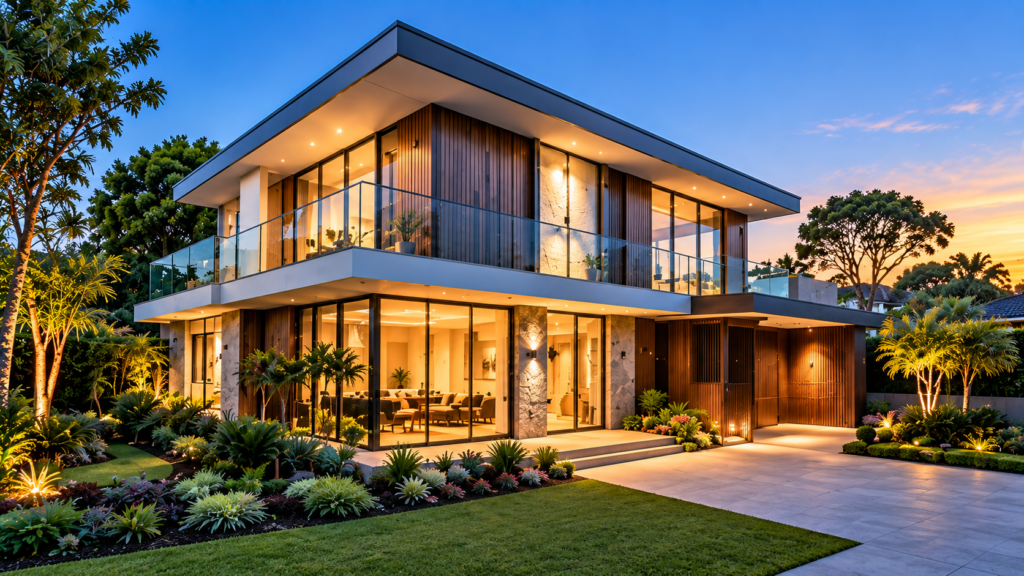
Designing for climate
Orientation, shading, cross-ventilation, insulation and window placement can have a major effect on comfort. Good residential design considers how sun and weather change through the year and uses the building form to respond to those conditions.
Connecting indoors and outdoors
Courtyards, verandahs, terraces and large openings are common ways Australian homes extend living spaces into the landscape. The strongest examples create useful outdoor rooms while still managing heat, glare, privacy and weather exposure.
Material choices create character
Brick, timber, stone, concrete, metal and glass can each suit different sites and architectural ideas. Material selection is most effective when durability, maintenance and local conditions are considered alongside appearance.
The site should influence the house
Views are only one part of a site. Slope, neighbouring buildings, existing trees, street orientation, prevailing weather and privacy all influence how a home can be planned. Architecture becomes more distinctive when those constraints are treated as design opportunities.
A home still has to work
Strong architecture is not only visual. Storage, circulation, acoustics, flexible rooms and everyday maintenance affect how a home performs long after the first impression. AREM Property Stories will continue to explore homes and design ideas from across Australia as our editorial library grows.